The Expert Watch Dial Manufacturer for Precision Custom Builds

A professional watch dial manufacturer acts as the strategic engineering partner for any serious timepiece brand. Their role involves translating complex CAD designs into high-precision components that define the watch’s identity. By combining advanced metallurgy with finishing techniques like sunray brushing and multi-layer lacquer, these experts ensure every unit meets the mechanical tolerances and aesthetic benchmarks demanded by the luxury and professional tool watch sectors.
Why a Specialized Manufacturer is Non-Negotiable for Micro-Brands
In the watch business, the dial is the "face" that sells the story. For micro-brands, getting this component right isn't just a design choice; it is a prerequisite for market survival. A generalist assembly factory might handle the casing, but a specialized watch dial manufacturer focuses exclusively on the micro-tolerances that separate a high-quality timepiece from a generic fashion accessory.
Bridging the Gap Between Concept Sketches and Physical Prototypes
Here is the reality: a stunning Photoshop mockup rarely translates directly to a physical dial without significant technical recalibration. Expert manufacturers bridge this gap by auditing your vector files for "printability." They determine if a serif font is too delicate for pad printing or if an applied index sits too close to the center pinion. At Tailsprouts, we’ve learned that a few microns of adjustment can be the difference between a functional masterpiece and a costly production failure.
Scaling from Small-Batch Bespoke Orders to Full-Scale OEM Production
Many boutique brands launch with limited runs of 50 to 100 units. A reliable wrist watch dial manufacturer must provide the infrastructure to scale seamlessly. This involves a transition from CNC-milled prototypes to stamped or laser-cut production blanks without sacrificing the fine details of the original design. Consistency is the only metric that matters when moving from ten units to a thousand.
Navigating the Technical Limitations of Traditional Dial Fabrication
Not every design is physically viable. For example, deep "sandwich" dials require specific plate thicknesses to ensure the movement’s hour wheel maintains sufficient clearance. A seasoned manufacturer flags these issues during the Design for Manufacturing (DFM) phase, preventing thousands of dollars in wasted tooling costs.
Visit the Tailsprouts watch store
Advanced Dial Fabrication Techniques and Material Science
The visual impact of a watch depends on how the dial interacts with light—a discipline where material science meets precision craftsmanship.
The Art of Surface Finishing: Sunray, Matte, and Sandblasted Textures
Surface finishes define the market segment. A sunray finish utilizes specialized abrasive brushes to create radial lines that reflect light in a dynamic "starburst" pattern. Conversely, sandblasted or matte finishes provide the anti-reflective properties required for pilot or field watches where legibility is paramount.
Material Selection: From Marine-Grade Brass to Lightweight Forged Carbon
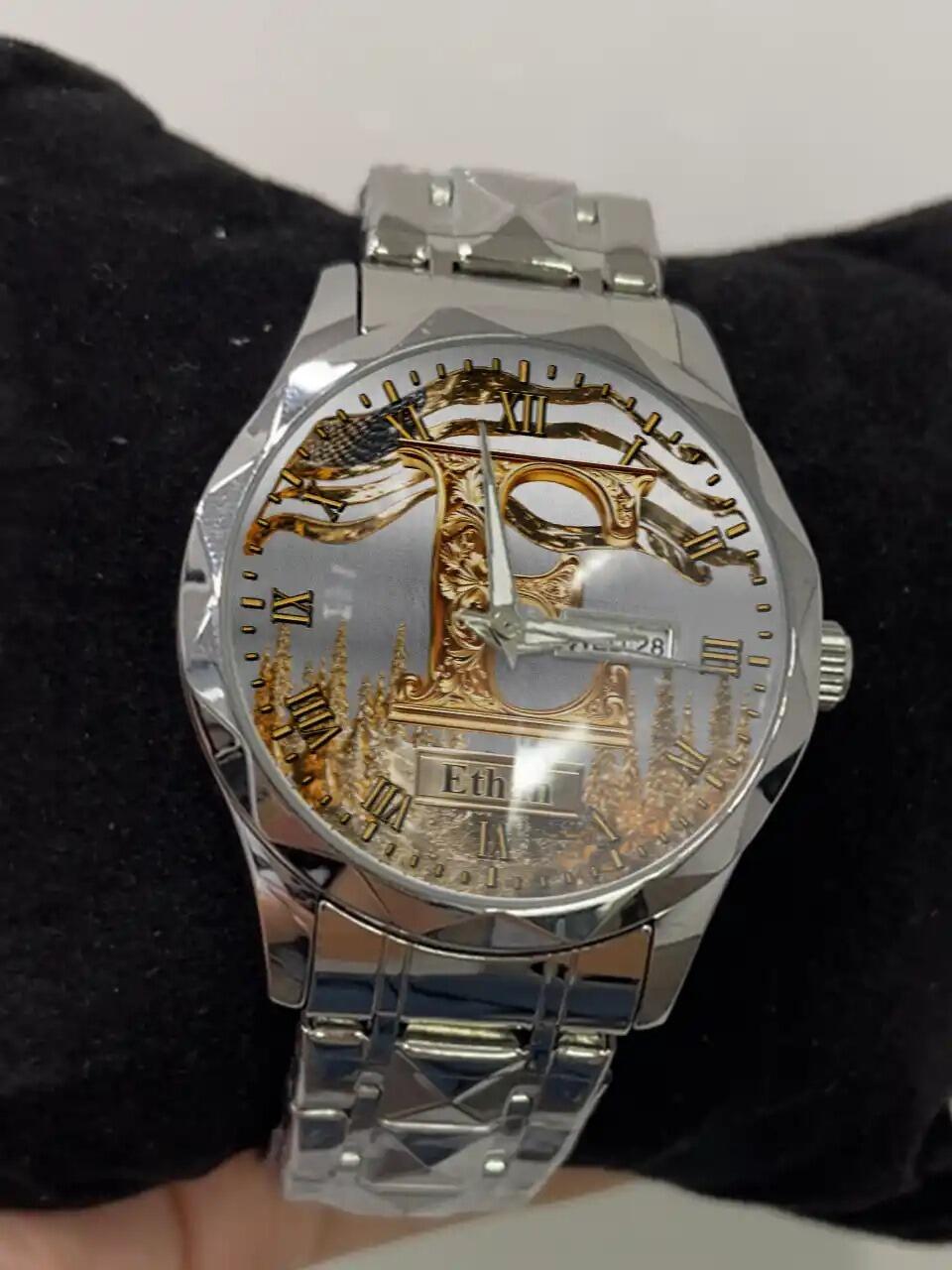
While most dials utilize a brass base for its stability and plating compatibility, modern luxury sports watches are increasingly adopting exotic materials. Forged carbon offers a marbled aesthetic where no two dials are identical. For brands exploring unique textures, our Personalized Initial Metal-look Dial Pattern Watch demonstrates how complex patterns can be integrated into a cohesive, professional design.
High-Precision Pad Printing and Multi-Layer Lacquer Application Methods
Pad printing, or tampography, allows for crisp ink transfer onto uneven or curved surfaces. For "California" dials or intricate tachymeter scales, manufacturers use silicone pads to lift ink from etched plates (clichés). To achieve a high-gloss "liquid" look, multiple layers of clear lacquer are applied and hand-polished, creating the depth characteristic of high-end horology.

Comparative Analysis: Selecting the Right Dial Finish for Your Target Market
| Finish Type | Visual Effect | Durability Rating | Manufacturing Complexity | Recommended Price Tier |
|---|---|---|---|---|
| Sunray / Sunburst | Dynamic light reflection | High (Electroplated) | Moderate | Mid-Range Luxury |
| Enamel (Grand Feu) | Deep, glass-like luster | Extremely High | Very High | High-End/Boutique |
| Applied Indices | Three-dimensional depth | High | Moderate to High | Professional/Tool Watch |
| Forged Carbon | Unique, organic patterns | Very High | High | Luxury Sport |
Solving the Sourcing Bottleneck: Addressing Common Manufacturing Hurdles
Finding watch dials suppliers is the easy part; finding a partner that maintains strict Quality Control (QC) across a 500-unit run is the real challenge.
Mitigating Alignment Errors and Index Displacement in Mass Production
A misaligned "12 o'clock" marker will destroy a brand's reputation instantly. Professional manufacturers utilize precision jigs and automated optical inspection (AOI) to ensure every applied index is perfectly perpendicular to the dial feet and centered within the case.
Ensuring Lume Consistency: Super-LumiNova Grade Selection and Application
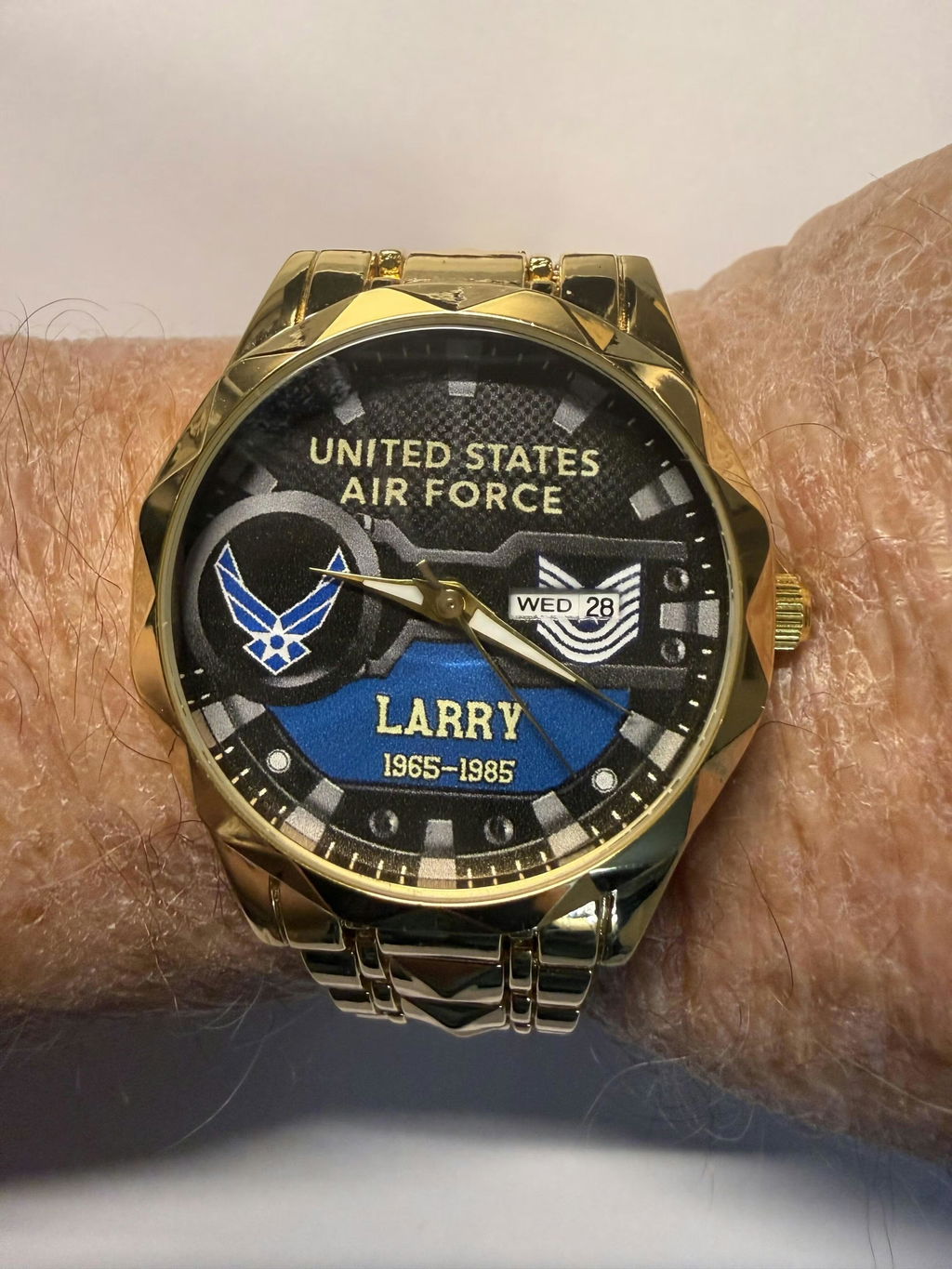
The glow factor is a critical selling point for tool watches. Manufacturers must select between different grades of Swiss Super-LumiNova, such as C3 or BGW9. The application method—whether hand-filled into "cups" or screen-printed—directly determines the brightness and longevity of the lume. For projects honoring specific milestones, such as a Customized Veteran Watch, high-visibility lume is a non-negotiable functional requirement.
Managing Minimum Order Quantities (MOQ) for New Market Entrants
The biggest barrier for new brands is the MOQ. While some factories demand 500 pieces per SKU, a flexible watch dial manufacturer might offer "batch-sharing." This allows you to use the same dial blank with different colorways or lume applications to meet total volume requirements without overextending your inventory.
The Rigorous Quality Assurance Protocol for Professional-Grade Dials
Quality control in dial making happens at the microscopic level.
- Macro-Inspection: Technicians use 10x or 20x magnification to identify micro-scratches, dust particles trapped under lacquer, or ink "bleeding" in pad printing.
- Functional Testing: Dials undergo UV chamber testing to ensure colors do not fade under sun exposure, along with thermal stability tests to prevent warping.
- Tolerance Precision: Achieving 0.05mm precision is the industry standard. If dial feet are even slightly off-center, the movement will not align, and the hands will eventually scrape the dial surface.
From Design to Reality: A Practical Checklist for Your First Production Run
Before committing a deposit to a watch dial manufacturer, ensure your technical package is complete.
Preparing Technical CAD Drawings and Vector Files for Dial Feet Placement
Your manufacturer requires more than a mockup. They need a technical drawing (typically in .DXF or .DWG format) specifying the exact coordinates of the dial feet. These coordinates vary depending on whether you are utilizing a Seiko NH35, a Miyota 9015, or a Swiss ETA 2824. For a deeper analysis of movement-specific customization, refer to our guide on Why Custom Watches Are a Timeless Fashion Statement.
Understanding the Prototyping Phase and Revision Cycles
The first prototype is rarely the final production version. You should budget for at least two revision cycles. Use this phase to evaluate how the color behaves under different lighting conditions—from LED office lights to natural sunlight—a phenomenon known as metamerism.
Finalizing Logistics: Secure Packaging and International Sourcing Lead Times
Dials are exceptionally fragile. Verify that your manufacturer uses vacuum-sealed trays to prevent movement during transit. If sourcing internationally, factor in a 4–6 week lead time for prototypes and 8–12 weeks for mass production. To ensure the final customer experience matches the quality of the dial, many brands bundle their pieces with a Luxury Watch Box for a professional presentation.
Industry FAQ: Critical Insights for Sourcing Custom Watch Dials
What is the standard lead time for a custom watch dial prototype?
Generally, the process takes 25 to 35 days. This includes the time required to etch printing plates and manufacture custom molds for any applied indices.
Can a manufacturer produce dials compatible with multiple Seiko or Swiss movements?
It is possible using "multi-fit" dial feet or removable feet that are bonded later. However, for maximum stability and hand alignment, we always recommend manufacturing the dial specifically for one movement's fixed feet positions.
How does the thickness of the dial affect hand clearance and case fitment?
Standard dials range from 0.4mm to 0.8mm thick. If a dial exceeds these specs (common with stone or carbon fiber), you may require "long-post" hands to ensure they clear the dial surface without friction.
What are the primary differences between pad printing and 3D applied indices?
Pad printing is flat, versatile, and cost-effective for complex graphics. 3D applied indices are separate metal components pinned to the dial, providing a luxury aesthetic and depth, though they increase assembly costs and complexity.
How can I verify the quality of the luminous material used on my dials?
Always request a "Lume Map" and a certificate of authenticity from the supplier (such as RC Tritec for Super-LumiNova). You should also ask for a luminosity decay report to see how many hours the lume remains visible in total darkness.